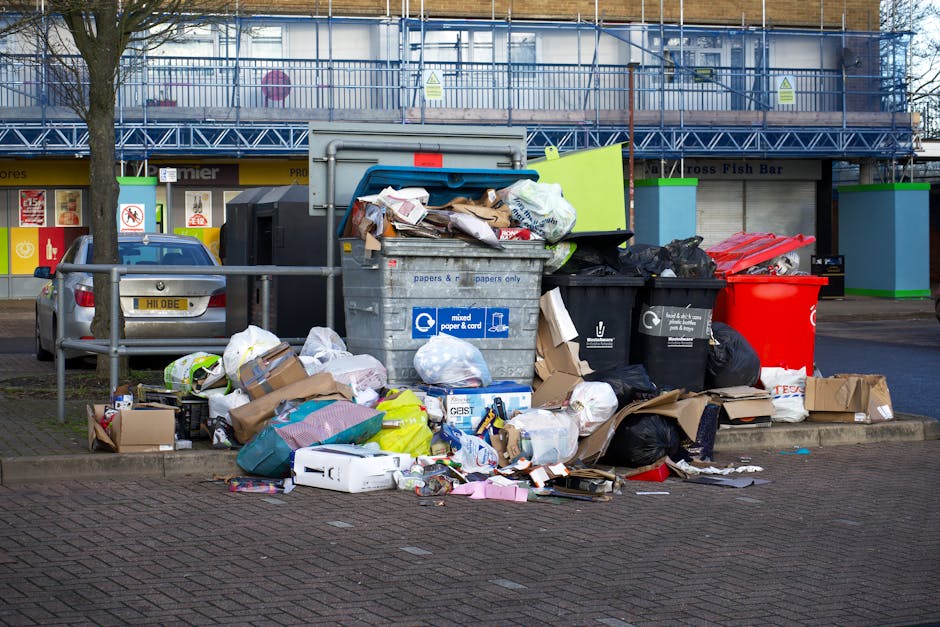
Avoid hidden charges for rubbish removal in Lambeth Council area
If you have ever booked rubbish removal and then felt that little sting of surprise when the final bill landed, you are not alone. In Lambeth, where access can be tight, parking can be awkward, and jobs vary from a single bulky item to a full flat clearance, hidden fees can creep in fast. The good news? You can avoid hidden charges for rubbish removal in Lambeth Council area with a bit of preparation and by asking the right questions before anyone lifts a bag.
This guide breaks down what hidden charges usually look like, why they happen, and how to spot them before they become your problem. It also gives you a practical step-by-step approach, a simple checklist, and a few real-world examples so you can book with more confidence. Let's face it, nobody wants a clear-out that turns into a back-and-forth over extra fees.
Table of Contents
- Why Avoid hidden charges for rubbish removal in Lambeth Council area Matters
- How Avoid hidden charges for rubbish removal in Lambeth Council area Works
- Key Benefits and Practical Advantages
- Who This Is For and When It Makes Sense
- Step-by-Step Guidance
- Expert Tips for Better Results
- Common Mistakes to Avoid
- Tools, Resources and Recommendations
- Law, Compliance, Standards, or Best Practice
- Options, Methods, or Comparison Table
- Case Study or Real-World Example
- Practical Checklist
- Conclusion
- Frequently Asked Questions
Why Avoid hidden charges for rubbish removal in Lambeth Council area Matters
Hidden charges are not just annoying. They can change how you budget, how quickly you can clear a property, and whether you feel confident using the same provider again. In a busy part of London like Lambeth, rubbish removal is often booked under time pressure: a tenancy is ending, builders are due in, a loft needs clearing, or the office needs a clean reset. That pressure makes people more likely to agree to vague quotes.
The main issue is simple. If the price is not explained clearly before collection, you may end up paying extra for things like access issues, stair carries, congestion, parking, wait time, item type, or load volume. Some of those costs are fair if they are disclosed upfront. The problem is when they appear later, after the rubbish is already on the truck.
To be fair, not every extra cost is a hidden charge. Sometimes a job really does change on arrival. But a trustworthy company should tell you how pricing works in advance, so you can compare options properly. If they also have clear information on pricing and quotes, that is usually a good sign that they value transparency.
Practical takeaway: A fair rubbish removal price should explain what is included, what may cost extra, and when the price could change. If those points are vague, keep asking until they are not.
How Avoid hidden charges for rubbish removal in Lambeth Council area Works
The process is really about making the pricing visible before collection day. A proper quote should be based on the type of waste, the amount, where it is stored, and how easy it is to remove. That means a garden pile in a front drive is a different job from a third-floor flat with a narrow staircase and no lift. Obvious, but it still gets missed.
In practical terms, avoiding hidden charges usually works like this:
- Describe the waste accurately. Mention furniture, builders' waste, appliances, mattresses, mixed rubbish, or confidential material.
- Explain access clearly. Include stairs, parking restrictions, gated entrances, basements, lift access, and loading distance.
- Ask what the quote includes. Labour, loading, transport, disposal, recycling, and minimum charges should all be clear.
- Check for special item fees. Some items, such as fridges, sofas, or hazardous waste, may need separate handling.
- Confirm the pricing trigger. Find out exactly what would make the price change, and by how much.
If you are clearing a home, you may want to compare this with a broader service such as home clearance or house clearance, especially when the job involves several rooms. For flats, the access picture matters even more, so flat clearance can be a useful benchmark for what a fuller service might include.
Here is the key thing: the best quotes are not necessarily the cheapest. They are the ones you can actually trust. That sounds almost too simple, but it saves time and stress.
Key Benefits and Practical Advantages
When you take hidden charges out of the equation, rubbish removal becomes much easier to plan. The benefits are not only financial, although that is the obvious one. You also get less friction, less worry, and far fewer awkward phone calls after collection.
- Better budgeting: You can compare providers properly and know what you will likely pay.
- Less stress on the day: No one likes renegotiating while bags are already outside.
- Faster decision-making: Clear pricing helps you book without endless follow-up questions.
- Improved trust: Transparent pricing usually reflects a more organised operation.
- Fewer disputes: If the scope is agreed in advance, there is less room for confusion later.
There is also a practical side that people overlook. When charges are clear, you can choose the right service level. For instance, if your job is mainly furniture, you might look at furniture disposal or furniture clearance. If the waste is mixed or commercial, a broader waste removal service may fit better. A little clarity upfront saves a lot of confusion later.
Who This Is For and When It Makes Sense
This topic matters for more people than you might think. It is not just for landlords or building firms. Hidden charge issues can affect almost anyone booking a collection in Lambeth.
- Tenants moving out: You may need a quick, tidy clear-out with no surprise add-ons.
- Landlords and letting agents: Fast turnaround matters, and bill clarity helps with tenant disputes.
- Homeowners renovating: Builders' waste often creates pricing variables, especially if the pile grows.
- Office managers: Office clearance can involve furniture, electronics, and disposal paperwork.
- Trades and contractors: A clean, predictable quote keeps margins intact.
- Busy households: If you are doing a garage, loft, or garden clear-out, you want a simple answer, not a moving target.
It makes sense whenever the job has uncertainty around volume, access, or waste type. So, if you have a mixed pile in the garden and a couple of old cabinets in the hallway, you should expect the provider to ask questions. That is not being difficult. That is how good quoting works.
For example, a cluttered loft can look small from the hatch and enormous once bags start coming down. If that sounds familiar, loft clearance is one of those services where clear pricing really matters.
Step-by-Step Guidance
Here is a straightforward way to protect yourself from surprise costs.
- List everything to be removed. Write down each item or group the items by room.
- Take photos from different angles. A quick photo often helps more than a long description.
- Note access conditions. Mention stairs, floor level, parking restrictions, and whether the team can park nearby.
- Ask for a written quote or confirmed price range. Verbal estimates are easy to misunderstand.
- Ask what is included. Labour, loading, disposal, VAT if applicable, and any waiting time should be clear.
- Check special waste rules. Items like appliances, fridges, or hazardous waste may need separate handling.
- Confirm the collection window. If the team is delayed, ask whether that affects the price.
- Get the final price confirmation before unloading begins. Once the van is open, the pressure rises. Funny how that works.
A useful habit is to compare your quote against the provider's terms and conditions and their payment and security information if available. You are not looking for legal perfection here, just enough clarity to know how the job is billed and when payment is taken.
If the job is outside a home setting, the same logic applies. A company clearing a reception area or old stock room should be able to explain costs for office clearance or business waste removal in plain English. If they cannot, that is a slight wobble in the trust department.
Expert Tips for Better Results
After seeing how most pricing misunderstandings happen, a few habits stand out.
- Be precise about quantity. "A few bags" can mean very different things to different people.
- Separate special items early. Sofas, mattresses, and appliances often carry different handling requirements.
- Ask what happens if the load is smaller than expected. Some firms adjust fairly; others do not.
- Ask what happens if the load is larger. The honest answer matters more than the cheerful one.
- Request clarity on parking and access. In London, this can be the difference between a smooth visit and a scramble.
- Keep waste sorted if you can. Mixed waste can be more expensive to process than separated items.
One small but helpful tip: if the provider asks for photos, send them in daylight. It sounds trivial, but a dark hallway photo at 7 p.m. is rarely useful. Morning light makes a world of difference. Strange, but true.
If sustainability matters to you, ask how the company handles recycling. A transparent team will usually be happy to explain its approach to reuse and sorting. You can also look at recycling and sustainability to understand what the service aims to do after collection.
And if you are clearing bulky items like an old fridge, freezer, or washing machine, check the provider's approach to fridge and appliance removal. Those items can involve additional processing, so it is better to ask than assume.
Common Mistakes to Avoid
Most hidden charge problems come from a few repeat mistakes. Nothing dramatic. Just small oversights that add up.
- Booking on price alone: The cheapest quote can become the most expensive once extras are added.
- Under-describing the load: If the provider thinks it is one van load and it turns out to be two, tension follows.
- Ignoring access details: A basement flat and a ground-floor property are not the same job.
- Forgetting special waste: Mattresses, appliances, and some renovation waste can change the price.
- Not asking about minimum charges: Small jobs sometimes have a minimum fee that should be explained clearly.
- Assuming quote terms are flexible: They may not be, so read the basics before agreeing.
A very common one is failing to mention that the rubbish is spread across several rooms. That matters because the loading time can increase. It is not a deal-breaker, but it should be priced honestly. Same with garage clearance and garden clearance jobs, where waste may be loose, wet, awkward, or mixed with items that need sorting.
Another mistake is forgetting about confidentiality. If you are disposing of paperwork, files, or office records, ask about confidential shredding before collection. That is one of those details people remember only after the fact. Bit late then, really.
Tools, Resources and Recommendations
You do not need fancy software to avoid hidden charges. A simple process is usually enough.
- Your phone camera: Good photos help create a more accurate quote.
- A short written inventory: A notes app or paper list is enough.
- Basic measuring tape: Useful for sofas, wardrobes, or awkward items.
- Building access notes: Lift size, stair width, and parking details can save confusion.
- Waste sorting: Separate recyclable items where possible.
Useful service pages on the site include builders waste clearance for renovation debris, mattress and sofa disposal for bulky domestic items, and furniture disposal when you need single-item removals handled properly.
If you are not sure what your mixed load contains, keep it simple and ask the provider to classify it for you. That is what a proper quote process should do. If the team has a clear booking flow, such as an online option on book online, that can make the process even smoother.
Law, Compliance, Standards, or Best Practice
For rubbish removal in the UK, the big principle is straightforward: waste should be handled responsibly, and the person booking the service should be honest about what is being collected. You do not need to become a waste law expert, but a few basics are worth knowing.
First, special waste types need care. Hazardous materials, sharp items, electrical waste, and certain appliances may not be treated like ordinary household rubbish. If something sounds risky, ask before collection. A reputable provider should explain whether it belongs under hazardous waste disposal or another category.
Second, insurance and safety matter. Teams working in tight spaces, on stairs, or around heavy items should have sensible procedures in place. If you want reassurance, look for clear information on insurance and safety and health and safety policy.
Third, best practice in pricing is transparency. That means no vague "subject to change" language without explanation, no hidden call-out fee sprung on arrival, and no unexplained surcharge at the end. The more the process is spelled out in advance, the better.
If you ever need to raise an issue, it helps if the company has a clear route for resolving it. A published complaints procedure is a decent sign that they expect to deal with problems properly rather than shrugging them off.
Options, Methods, or Comparison Table
There are a few ways people in Lambeth typically deal with rubbish. Each has pros and cons, especially where pricing transparency is concerned.
| Method | Best for | Pricing clarity | Common risk of hidden charges |
|---|---|---|---|
| Booked rubbish removal team | Mixed loads, bulky items, fast turnaround | Usually good if quoted properly | Access, load size, special items |
| Skip hire | Longer projects, renovations, ongoing waste | Clear if you know the permit and size rules | Permit issues, overfilling, restricted waste types |
| Self-haul to disposal point | Small loads and people with a vehicle | Can be predictable, but time costs are yours | Fuel, time, vehicle wear, sorting mistakes |
| Full property clearance | Moves, bereavement clearances, large declutters | Can be very clear when surveyed first | Extra rooms, fragile items, access changes |
If you are unsure which route fits, use the scale of the job as your guide. A single sofa is one thing. A full garage with broken furniture, paint tins, and old boxes is quite another. That is where comparing house clearance against a smaller home clearance style job can help you avoid paying for more than you need.
Case Study or Real-World Example
Imagine a resident in Lambeth clearing a second-floor flat after a move. The load includes a wardrobe, a broken bed frame, two mattresses, several bags of mixed waste, and a small fridge. The first quote they receive sounds low, but it is based on "standard access" and does not mention stairs or appliance disposal.
On the day, the team arrives, sees the narrow stairwell, and notes that the fridge needs separate handling. Suddenly the price has changed. The resident is annoyed, the crew is trying to stay efficient, and nobody enjoys the conversation. It is not a disaster, but it is exactly the sort of friction you can usually avoid.
Now compare that with a better approach. The resident sends photos in daylight, explains the floor level, mentions the fridge, and asks for the total likely cost before booking. The final price may be a little higher than the first vague estimate, but it is honest and agreed. Much better. Cleaner, calmer, done.
That kind of scenario is common in flat moves, especially where lift access is uncertain or parking is tight. It also crops up in office clearance jobs, where boxes, desks, and electronics can be underestimated at first glance. The lesson is simple: describe the reality, not the ideal version of it.
Practical Checklist
Use this before you confirm any rubbish removal booking.
- Have I listed every item or bag to be removed?
- Have I shared clear photos from more than one angle?
- Have I explained access, stairs, parking, and loading distance?
- Have I asked what the quote includes?
- Have I asked about minimum charges or call-out fees?
- Have I identified bulky, awkward, or special waste items?
- Have I checked whether appliances, mattresses, or sofas cost differently?
- Have I read the provider's terms where relevant?
- Have I asked how payment is taken and when?
- Have I confirmed what would trigger a price change?
If you can tick most of those off, you are already ahead of the average customer. Sounds a bit odd, but the best way to avoid hidden charges is usually a few ordinary questions asked early.
Get a free quote today and see how much you can save.
Conclusion
Avoiding hidden charges for rubbish removal in the Lambeth Council area is not about distrust. It is about being clear, informed, and a little bit prepared. If you know what is being removed, where it is located, and how easy it is to collect, you can get a much fairer quote and a far calmer experience.
The main lesson is simple. Ask for clarity before collection, not after. Check how the price is built, ask about access and special items, and prefer providers who explain things plainly. That approach protects your budget and makes the whole job feel more manageable.
And honestly, in a busy London borough, that peace of mind is worth a lot.
Frequently Asked Questions
How do I avoid hidden charges for rubbish removal in Lambeth Council area?
Give the provider accurate details about the waste, access, parking, and special items before booking. Ask what the quote includes and what could change the price.
What are the most common hidden charges in rubbish removal?
Common extras include stair carries, difficult access, parking-related costs, extra labour time, appliance disposal, and charges for oversized or hazardous items.
Is the cheapest quote usually the best option?
Not always. A very low quote can leave out important costs. A slightly higher but clearer quote is often better value because there are fewer surprises later.
Should I send photos before booking rubbish removal?
Yes, if possible. Photos help the provider judge volume and access more accurately, which reduces the chance of price changes on the day.
Do stairs always cost extra?
Not always, but stairs are a common factor in pricing. If the property is above ground level, ask whether stair carries are included or charged separately.
Can appliances or fridges cost more to remove?
Yes. Some appliances need special handling or disposal arrangements, so it is wise to ask in advance whether they are included in the standard price.
What if I only have a small amount of rubbish?
Small jobs can still have minimum charges. Ask whether there is a minimum collection fee so you know whether the service is worthwhile for your load.
Is rubbish removal pricing different for flats and houses?
It can be. Flats often involve more access detail, such as stairs, lifts, entry codes, or parking restrictions, which may affect the final quote.
How do I know if a company is being transparent?
Transparent companies explain what is included, what might cost extra, how the price is calculated, and how payment works. They answer questions clearly rather than vaguely.
Can I reduce the cost by sorting my waste first?
Often, yes. Separating recyclable or bulky items where possible can make collection easier and may reduce processing complexity, depending on the job.
What should I ask before confirming a booking?
Ask about load size, access, special waste, minimum charges, payment timing, and whether the quote is fixed or subject to change.
What if the team arrives and says the job is bigger than expected?
Ask them to explain exactly why the price has changed. If the original description was inaccurate, the adjustment may be fair. If not, you should query it calmly and firmly.