Health and Safety Policy — Commercial Waste Removal Clapham
This Health and Safety Policy describes the approach of our commercial rubbish and waste removal operation to protect employees, clients, contractors and the public across our service area. It sets out responsibilities, hazard control measures and safe working standards for commercial waste removal, commercial rubbish disposal and associated on-site activities. The policy affirms our commitment to maintaining safe systems of work, preventing injury and minimising environmental harm through robust procedures and continuous improvement.
Responsibilities and Management Commitment
Our senior management will ensure adequate resources are provided to implement this policy. Managers and supervisors are responsible for day-to-day enforcement of safety procedures for rubbish removal Clapham operations and for ensuring that staff are competent, supervised and appropriately equipped. All employees have a duty to take reasonable care of their own health and safety and to cooperate with management by following safe systems of work.
Risk Assessment, Planning and Safe Systems
Comprehensive risk assessments will be carried out for all commercial waste services in Clapham tasks, including loading, transportation, segregation, storage and disposal of waste streams. Assessments will identify hazards such as manual handling, sharps, hazardous substances, slips, trips, falls and vehicle movements. Control measures will be implemented using the hierarchy of controls: elimination, substitution, engineering controls, administrative controls and PPE. Risk control measures will be documented, communicated and reviewed regularly.
 Training and Competence
Staff will receive induction training and ongoing refresher training tailored to their roles in the commercial waste removal sector. Training covers safe lifting techniques, correct use of equipment, segregation of recyclable and hazardous materials, safe vehicle operation and emergency procedures. Competence will be assessed and records maintained. Supervisors will ensure new operatives are supervised until fully competent.
Personal Protective Equipment (PPE) and Equipment Safety
Appropriate PPE will be provided and used for all tasks. Examples include gloves, high-visibility clothing, safety boots, eye protection and respiratory protection where dust or fumes are present. Equipment used for waste transfer and compacting will be regularly inspected, serviced and maintained. A formal equipment checklist will be completed before use and any defects will lead to immediate withdrawal of the item from service until repaired.
Safe Work Practices
- Proper segregation of waste streams to avoid cross-contamination and hazardous reactions.
- Strict protocols for handling sharps, asbestos or chemically contaminated materials.
- Designated loading and unloading zones to separate pedestrians from vehicle movements.
- Clear documentation of collection records and permitted disposal routes for controlled wastes.
Vehicle Safety and Route Management
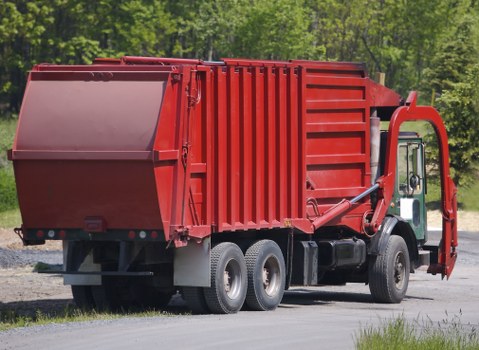
Vehicles used in commercial waste collection are subject to routine safety checks and maintenance schedules. Drivers must be trained to operate tail lifts, compactors and secure loads properly. Route planning will consider traffic conditions, legal weight limits and safe access to client premises. All vehicle incidents, defects or near misses must be reported immediately and investigated to identify preventive actions.
Emergency Response, Spills and Incident Reporting
Procedures are in place to respond to spills, leakages and other environmental incidents. Emergency kits and absorbent materials will be carried on relevant vehicles. Staff must follow the defined escalation process and emergency contacts for major incidents. All accidents, injuries, near misses and dangerous occurrences must be reported without delay. Investigations will determine root causes and corrective actions to prevent recurrence, with findings recorded and reviewed.
Monitoring, Audit and Continuous Improvement
We will monitor performance through regular inspections, audits and health and safety performance indicators. Records of risk assessments, training, maintenance and incidents will be kept and used to drive improvements. Safety meetings will be held regularly to review performance, share lessons learned and update procedures. Continuous improvement is central to our approach — deficiencies will be corrected promptly and best practices adopted across all service activities.
Policy Review
This policy will be reviewed at least annually and following significant changes to operations, equipment or legislation. The review will ensure the policy remains effective, aligned with legal duties and adapted to the evolving risks of commercial waste removal, rubbish collection and commercial waste services. All changes will be communicated to staff and contractors and incorporated into training and operational procedures.
Implementation of this policy protects people, property and the environment while supporting reliable commercial waste removal services across our service area. Compliance with these requirements is mandatory for all personnel engaged in rubbish and waste operations. Management will provide oversight, and employees are expected to contribute actively to a safe working culture.
