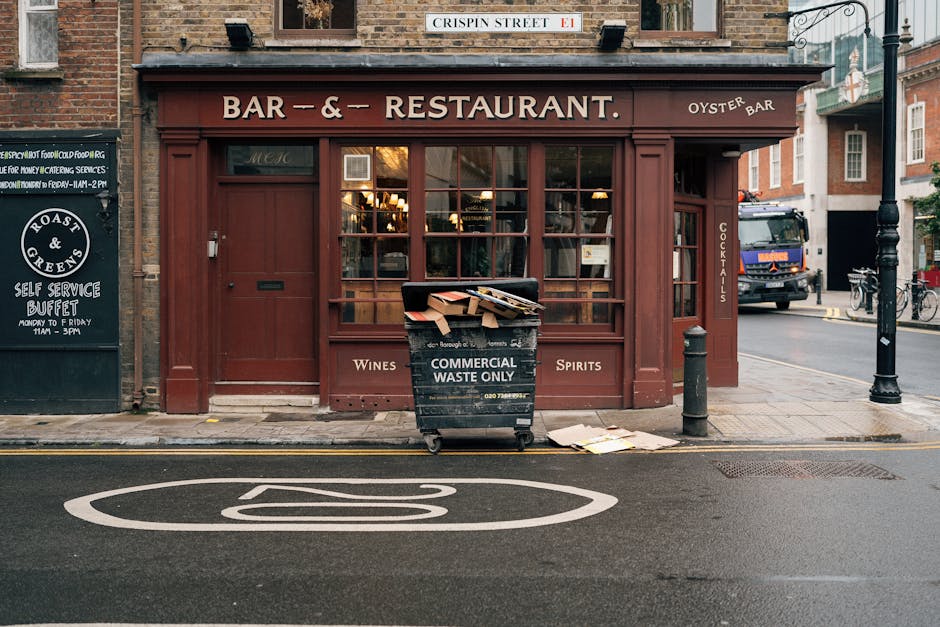
Commercial waste removal for Clapham businesses SW4: a practical guide for local companies
If you run a shop, office, cafe, salon, studio, workshop, or building firm in Clapham, waste has a habit of showing up at the worst possible moment. One day it is a few broken boxes and some packaging. Next, it is a back room full of old furniture, a strip-out pile, or a stack of paper that needs handling properly. Commercial waste removal for Clapham businesses SW4 is the straightforward way to keep that mess under control without disrupting the working day.
The real value is not just "getting rid of stuff". It is speed, cleanliness, safer working conditions, and a process that suits the pace of a busy London business. Done well, commercial clearance helps you stay presentable for customers, protect staff, and avoid the kind of build-up that quietly eats time. And let's face it, nobody wants to start Monday morning stepping over an awkward pile of office chairs.
This guide breaks down how the service works, what to expect, what to watch out for, and how to choose the right approach for your SW4 premises. You will also find a checklist, a comparison table, and a realistic example from a local business scenario. No fluff. Just the useful bits.
Why Commercial waste removal for Clapham businesses SW4 Matters
Commercial waste is not just "rubbish from a business". It includes everything from packaging, broken fixtures, old desks, office paper, store fittings, display units, and refurbishment debris to occasional specialist items that need careful handling. In a busy area like Clapham, where premises can be tight on space and access can be awkward, unmanaged waste becomes a genuine operational problem very quickly.
There is also a local reality to consider. Many SW4 businesses operate from smaller units, shared buildings, upper floors, narrow side streets, or locations where timing matters because footfall is constant. A pile of waste outside the wrong door at the wrong time can look unprofessional in minutes. You can almost hear the sigh from the person trying to carry a flat-pack box past it.
Proper waste removal matters because it supports the basics that keep a business moving:
- clear walkways and safer access for staff and visitors
- tidier front-of-house areas and better first impressions
- less clutter in stockrooms, offices, and back-of-house spaces
- faster turnaround after refurbishments, moves, or clear-outs
- better control of items that should not be mixed with general waste
There is another layer too: waste handling can affect your reputation. Customers notice when a business looks organised. Teams notice when their workspace is clean and easier to work in. To be fair, a tidy site does not solve every business problem, but it removes one of the more annoying ones.
How Commercial waste removal for Clapham businesses SW4 Works
The process is usually simpler than people expect. A commercial waste removal team will assess what needs clearing, what type of material is involved, how much space is available, and whether any items need special handling. From there, the job is planned around access, timing, loading, and disposal.
In many cases, businesses choose this route because it is more flexible than waiting for a full skip arrangement or trying to manage removal in-house. If your team is already stretched, moving heavy or bulky waste yourself can quickly turn into a half-day distraction. Or a whole day, if the lift is out and the stairs are narrow. That part never changes, somehow.
A normal commercial clearance usually follows this sequence:
- Initial assessment - you explain what needs removing, how urgent it is, and what access is like.
- Quotation or booking - the job is priced based on volume, labour, type of waste, and any specialist requirements.
- Arrival and loading - the team arrives, confirms the scope, and begins removing items safely.
- Sorting and separation - recyclable materials, reusable items, and special waste streams may be separated where appropriate.
- Transport and disposal - waste is taken away for processing, recycling, or lawful disposal.
- Final tidy-up - the area is left clear and workable again.
For businesses with mixed waste, this step matters more than people realise. A room that contains cardboard, office furniture, old electrical items, and packaging from a fit-out needs a methodical approach, not a guess-and-shove approach. That is usually where professional help saves the most time.
If you are mainly dealing with workplace furniture, you may also find it useful to look at office clearance and furniture disposal, especially when desks, chairs, shelving, and reception items are part of the load.
Key Benefits and Practical Advantages
The obvious benefit is that the waste disappears. Useful, yes, but that is only the start. The bigger value comes from the knock-on effects.
- Less disruption: your team can keep working instead of spending hours moving bulky items.
- Faster turnover: ideal after refurbishments, office moves, shop resets, or end-of-lease clear-outs.
- Better presentation: customers, clients, and suppliers see a cleaner space.
- Safer premises: fewer trip hazards, less blocked access, and reduced manual handling risk.
- Improved organisation: once the clutter is gone, storage becomes easier to manage.
- Potential recycling value: many common business materials can be separated for recycling where suitable.
There is also a less obvious benefit: decision-making gets easier. Once the room is no longer packed edge-to-edge, you can see what actually needs replacing, what can be reused, and what should never have been stored there in the first place. Small insight, big difference.
Expert summary: For most SW4 businesses, the best commercial waste removal service is the one that fits around opening hours, access constraints, and the specific type of waste, not just the cheapest price on paper.
If your clearance includes mixed rubbish or general site waste, it may also help to review general waste removal alongside business waste removal so you can match the service to the actual job.
Who This Is For and When It Makes Sense
This service suits any Clapham business that produces waste in bursts, handles bulky items, or needs a faster clear-out than a standard collection schedule can provide. The most common users are not necessarily huge firms. Often, it is the smaller and medium-sized businesses that feel the pressure most.
It makes sense for:
- Offices clearing old furniture, filing, paper, and equipment
- Retail shops replacing display units, shelving, or stockroom clutter
- Cafes and restaurants managing packaging, damaged fittings, appliances, or storage overflow
- Builders and decorators dealing with renovation debris and strip-out waste
- Landlords and property managers preparing commercial units between tenancies
- Salons, studios, and clinics removing old fixtures, cabinetry, or packaging
It is also a practical option when you need a one-off clear-out rather than a long-term waste contract. For example, maybe you have just finished a refurb and need the leftover bits gone by the end of the week. Or maybe the storeroom has become a sort of museum of broken things. We have all seen one of those rooms.
If the job is specifically linked to a refurbishment or building phase, builders waste clearance may be more relevant. If the issue is mainly a workspace reset, then office clearance may be the cleaner fit.
Step-by-Step Guidance
If you are planning a commercial waste collection in SW4, the easiest way to avoid delays is to treat it like a small project, not an afterthought. A few minutes of prep can save a lot of faffing later.
- List the items and waste types. Note whether you have furniture, paper, packaging, electrical items, broken stock, or mixed rubbish.
- Separate what stays from what goes. Do this before the team arrives. It sounds obvious, but in practice it saves confusion.
- Check access. Think about stairs, lifts, loading bays, entry codes, parking, and any time restrictions.
- Flag anything unusual. If you have items that may need specialist handling, say so upfront rather than at the kerb.
- Choose a suitable time slot. Many businesses prefer early morning, lunchtime, or after closing so customers are not disturbed.
- Ask how the waste will be handled. If recycling or responsible separation matters to you, confirm the approach before booking.
- Keep a contact person available. One decision-maker on the day is usually enough. Two is fine. Six becomes chaos.
A good rule of thumb: if an item is awkward, heavy, dusty, sharp, or awkwardly shaped, mention it. That way, the team can plan properly and bring the right kit.
For businesses comparing disposal routes, it can also help to read up on what can go in a skip. Even if you do not plan to use a skip, the information is useful when weighing up load types and disposal limits.
Expert Tips for Better Results
After enough clearances, you notice the same small patterns. The jobs that go smoothly are rarely the ones with the most glamorous planning. They are the ones where someone bothered to sort a few details in advance.
1. Group waste by type
Even a loose grouping helps. Cardboard with cardboard, furniture with furniture, loose bagged waste together. It makes loading quicker and lowers the chance of useful materials being tangled up in general rubbish.
2. Keep a small "do not remove" zone
In busy workplaces, mistakes happen when everything gets mixed together. Put labels on items that are staying, or move them well away from the clearance area. A tiny bit of space can prevent a very annoying mistake.
3. Schedule clearances before peak trading periods
If you run a customer-facing business, avoid the run-up to your busiest times. A quiet Tuesday morning is often far better than a Friday afternoon when footfall is heavy and everyone is in a rush.
4. Be honest about the volume
Underestimating the amount of waste is a common issue. People often say "it is only a few things" and then the team arrives to find a small mountain. Not a disaster, but it changes timing and vehicle planning.
5. Think about the next use of the space
Clearance works better when you know what is happening after the waste leaves. Are you repainting? Installing shelving? Moving desks? A simple exit plan stops the room from filling up again two days later.
Common Mistakes to Avoid
Most clearance problems are avoidable. Honestly, the biggest issues tend to come from assumptions rather than the waste itself.
- Leaving sorting until the day: this slows everything down and increases the chance of errors.
- Forgetting access details: if there is no lift or parking is limited, say so early.
- Mixing specialist items with normal rubbish: some materials need different handling.
- Choosing a service without checking scope: not every provider is suited to every type of commercial load.
- Trying to save money by delaying the job: clutter usually gets more expensive to deal with once it starts blocking daily operations.
- Ignoring recycling opportunities: a lot of business waste can be diverted where facilities and conditions allow.
Another quiet mistake is not involving the staff who actually use the space. The person at the front desk, the store manager, or the site supervisor usually knows what is clutter, what is important, and what is a problem waiting to happen. Listen to them. They usually know.
Tools, Resources and Recommendations
You do not need a complex system to manage commercial waste well. A simple, sensible setup is normally enough.
Useful practical tools and resources include:
- Room-by-room waste list: helps you track what needs removing and where it is located.
- Labelled sorting zones: one area for items to keep, one for items to remove, and one for anything uncertain.
- Basic measuring tape: useful when bulky items need estimating for access or vehicle planning.
- Photographs of the load: handy if you are requesting a quote or describing the job to a provider.
- Internal checklist: keeps managers, staff, and contractors aligned.
On the website, the pages for pricing and quotes and book online are useful next steps if you are moving from planning to action. For businesses that want to understand recycling pathways better, recycling and sustainability is worth a look too.
For handling old office papers or confidential documents, there is also confidential shredding, which is a sensible option when sensitive records are mixed into a general clear-out.
Law, Compliance, Standards, or Best Practice
Waste handling for businesses in the UK should always be approached carefully. The exact duties can vary depending on the material, the business type, and the disposal route, so it is sensible to check the requirements that apply to your own situation rather than assuming everything falls into one bucket. That is especially true where electrical items, sharp waste, fluids, or contaminated materials are involved.
Best practice usually means:
- keeping business waste separate from household waste
- making sure waste is handled by a suitable, lawful provider
- not mixing general rubbish with items that need special handling
- recording what was removed if you need internal audit or compliance records
- storing waste safely until collection, especially in shared or public-facing spaces
Safety matters too. Heavy lifting, blocked exits, broken glass, and awkward furniture are all ordinary risks in commercial clearances. A professional team should work in line with sensible health and safety practice, use appropriate handling methods, and avoid creating hazards for staff or the public. If you want reassurance on those points, the site's health and safety policy and insurance and safety information are relevant pages to review.
For materials that are potentially dangerous or require specialist handling, hazardous waste disposal is the page to explore. It is much better to separate those items early than to discover the issue halfway through a clearance. A bit awkward? Yes. Avoidable? Also yes.
If your business wants to understand what standards and responsibilities apply in broader terms, the terms and conditions and about us pages can help set expectations about the service relationship and company approach.
Options, Methods, or Comparison Table
There is more than one way to clear business waste. The right option depends on urgency, waste type, space, and how much involvement your team can spare.
| Option | Best for | Strengths | Watch-outs |
|---|---|---|---|
| Commercial waste removal service | One-off or irregular business clear-outs | Flexible, labour included, good for bulky items and mixed loads | Needs clear access and accurate waste description |
| Skip-based approach | Sites with space and ongoing builder-style waste | Useful for larger ongoing jobs, can stay on site | Access, permits, and what can go inside may be limiting |
| In-house disposal | Very small loads and simple materials | Feels direct, may suit tiny volumes | Takes staff time, manual handling risk, vehicle use, and disposal admin |
| Specialist collection for specific items | Fridges, appliances, furniture, or sensitive waste streams | Better handling for certain items | May need separation from the main load |
For many Clapham businesses, the best answer is a hybrid approach. General clutter via one service, bulky fittings via another, and specialist items handled separately. That is normal. In fact, it is often the neatest solution.
For example, a shop refit might involve general waste removal, some furniture disposal, and perhaps appliance removal if the back-of-house equipment is being replaced. The key is matching the method to the material, not forcing everything into one box because it sounds easier.
Case Study or Real-World Example
Here is a realistic example based on the kind of job that comes up often in SW4.
A small Clapham office had been working with a hybrid setup for years. Over time, old desks were pushed into a spare room, broken chairs were stacked by the wall, and archived paperwork had crept into every corner. Nothing dramatic. Just steady accumulation. By the time the team decided to clear it, the room smelled faintly of dust and old cardboard, and there was barely enough space to open the door properly.
The business needed the room cleared before new desks were delivered. So the first step was to separate what was staying, what was confidential, and what was simply no longer useful. The paper files were handled separately through confidential shredding, while the desks and chairs were grouped for removal. The team also checked access in advance because the building had a narrow stairwell and no helpful loading area. Very London, really.
Once the load was described clearly, the clearance was completed in one visit. The room was left open, easier to clean, and ready for the new layout. The useful lesson was not that the job was complicated. It was that a little planning saved a lot of friction. The business did not need a huge strategy. It just needed the clutter gone and the space back.
Practical Checklist
Use this checklist before you book a collection:
- Identify the exact waste types you want removed.
- Separate items to keep from items to clear.
- Check stair access, lift access, parking, and loading restrictions.
- Measure or photograph bulky items if needed.
- Flag any special waste, electrical items, or fragile items.
- Choose a collection time that avoids your busiest trading period.
- Nominate one staff member to meet the team or answer questions.
- Decide whether recycling, reuse, or shredding will be needed.
- Review pricing, payment, and service expectations in advance.
- Confirm what happens if the load turns out to be larger than expected.
If you complete those ten points, the job usually goes much more smoothly. Not perfectly, maybe, but smoothly enough that everyone can get on with the day.
Get a free quote today and see how much you can save.
Conclusion
Commercial waste removal for Clapham businesses SW4 is about more than clearing rubbish. It is about keeping the business usable, presentable, and safe in a place where space is precious and time matters. The best results come from good preparation, clear communication, and choosing the right method for the type of waste you actually have.
Whether you are clearing an office, resetting a shop, dealing with refurbishment debris, or simply trying to reclaim a back room that has quietly become unusable, the process does not need to be stressful. Get the scope right, handle the waste responsibly, and give yourself room to work again. Small win, but a real one.
And once that clutter is gone, the whole place tends to breathe a bit easier. Funny how that works.
Frequently Asked Questions
What counts as commercial waste for a Clapham business?
Commercial waste is any rubbish or unwanted material generated by a business. That can include office furniture, packaging, paper, stockroom clutter, fittings, refurbishment waste, and similar items from day-to-day operations.
Is commercial waste removal different from regular rubbish collection?
Yes. Commercial waste removal is designed for business premises, mixed loads, bulkier items, and more flexible scheduling. It is usually better suited to one-off clear-outs than standard household-style disposal.
How do I know whether I need office clearance or business waste removal?
If you are mainly clearing desks, chairs, filing, and workspace furniture, office clearance is often the closest fit. If the load is more mixed and includes general business rubbish or broader site waste, business waste removal may be the better option.
Can you remove bulky office furniture from upstairs premises?
Yes, provided access is safe and the item can be moved without causing damage or risk. Narrow staircases, tight corners, and no lift can affect planning, so it helps to mention those details in advance.
What happens to the waste after collection?
It is typically taken away for sorting, recycling, reuse where suitable, or lawful disposal. The exact route depends on the material type and condition. Some items need special handling, especially if they are electrical or hazardous.
Do I need to sort everything before the team arrives?
You do not need to overdo it, but a basic sort helps a lot. Separate what stays, what goes, and anything that may need special attention. That saves time and avoids accidental removal of useful items.
Can confidential papers be included in a general clearance?
They should usually be handled separately. If you have documents containing private or sensitive information, use a dedicated service such as confidential shredding rather than mixing them with general waste.
How much does commercial waste removal cost?
Costs vary depending on volume, waste type, access, labour, and whether specialist disposal is needed. The most reliable approach is to request a quote based on the actual load rather than guessing from floor space alone.
Is this service suitable for shops and restaurants in SW4?
Yes. Shops, cafes, restaurants, salons, and similar premises often use commercial waste removal for bulky items, old fixtures, back-room clutter, and occasional clear-outs between refurbishments or layout changes.
What if my business produces waste regularly rather than just once?
If you have a recurring waste stream, a regular business waste arrangement may be more practical than a one-off clearance. For larger or mixed periodic jobs, a flexible clearance service can still be useful when your needs change.
Can appliances like fridges or freezers be removed?
Often yes, but they may need to be handled as a specific waste stream. If appliances are involved, it is wise to mention them separately so the right removal method can be used.
What is the safest way to prepare for a commercial clearance?
Keep access clear, move staff away from the loading area, separate obvious hazards, and make sure one person is available to answer questions. A bit of prep makes the job smoother and safer for everyone involved.
How far in advance should I book?
That depends on urgency, but booking early is usually best if you have a deadline such as a refit, move-out, or store opening. If the job is straightforward, shorter notice may be possible, but planning ahead is always easier.
Can commercial waste removal help with recycling goals?
Yes, especially when items are separated sensibly and recyclable materials are kept apart where possible. If recycling matters to your business, it is worth asking how materials are sorted and processed before booking.
For more background on the company and service approach, you may also find about us, recycling and sustainability, and payment and security useful when you are comparing options and deciding what feels right for your business.